Medicare, a government-sponsored health care program that provides health coverage to virtually all of the nation’s elderly and a large share of people with disabilities. While Medicare is not without its problems, it has dramatically improved access to health care, allowed seniors to live longer and healthier lives, contributed to the desegregation of southern hospitals, and has become one of the most popular government programs.
At the time, conservatives strongly opposed Medicare, warning that a government-run program would lead to socialism in America:
Ronald Reagan: "If you don't stop Medicare and I don’t do it, one of these days you and I are going to spend our sunset years telling our children and our children’s children what it once was like in America when men were free." 1961
George H.W. Bush: Described Medicare in 1964 as "socialized medicine." 1964
Barry Goldwater: "Having given our pensioners their medical care in kind, why not food baskets, why not public housing accommodations, why not vacation resorts, why not a ration of cigarettes for those who smoke and of beer for those who drink." 1964
Bob Dole: In 1996, while running for the Presidency, Dole openly bragged that he was one of 12 House members who voted against creating Medicare in 1965. "I was there, fighting the fight, voting against Medicare . . . because we knew it wouldn’t work in 1965." 1965
Despite Medicare's success and the unrealized fears of its detractors, Republican lawmakers are still regurgitating the claim that Medicare would create a "Soviet-style model" of health care. As Rep. Roy Blunt (R-MS), chairman of the GOP Health Solutions Group, explained during a recent radio interview, "you could certainly argue that government should have never have gotten in the health care business…Government did get into the health care business in a big way in 1965 with Medicare, and later with Medicaid, and government already distorts the marketplace."
Over the years, Republicans proposed numerous schemes to slash funding or privatize Medicare. Most notably, in 1995, under the leadership of then House Speaker Newt Gingrich (R-GA), Republicans proposed cutting 14% from projected Medicare spending over seven years and forcing millions of elderly recipients into managed health care programs or HMOs. The cuts were to ensure that Medicare is "going to wither on the vine," Gingrich explained. Similarly, during the 2008 Presidential campaign, Sen. John McCain (R-AZ) proposed cutting $1.3 trillion from Medicare and Medicaid.
But while Republicans have sought to undermine the program, seniors have benefited from it. Since 1965, “the health of the elderly population has improved, as measured by both longevity and functional status.” In fact, according to a study from Health Affairs, life expectancy at age 65 increased from 14.3 years in 1960 to 17.8 years in 1998 and the chronically disabled elderly population declined from 24.9 percent in 1982 to 21.3 percent in 1994.”
Prior to Medicare, "about one-half of America’s seniors did not have hospital insurance," "more than one in four elderly were estimated to go without medical care due to cost concerns," and one in three seniors were living in poverty. Today, nearly all seniors have access to affordable health care and only about 14 percent of seniors are below the poverty line.

History Of Medicare

Democrat Kathy Hochul has made it too close to call.
A victory by Kathy in such a ruby red district would be a political catastrophe for Republicans, and they know it. Even just her strong polling numbers in such an overwhelmingly Republican stronghold is a clear repudiation of their reckless right-wing plan to end Medicare while giving tax breaks to Big Oil billionaires.
But it gets worse. Right wing shadow groups just got caught red-handed lying to voters. They got caught airing a TV ad that was so misleading that the local newspaper called it a “blatant attempt to trick voters” and “a quintessential political dirty trick.”
Obama on bin Laden: The full "60 Minutes" interview
STEVE KROFT: Mr. President, was this the most satisfying week of your Presidency?
PRESIDENT BARACK OBAMA: Well, it was certainly one of the most satisfying weeks not only for my Presidency, but I think for the United States since I've been President. Obviously bin Laden had been not only a symbol of terrorism, but a mass murderer who's had eluded justice for so long, and so many families who have been affected I think had given up hope.
And for us to be able to definitively say, "We got the man who caused thousands of deaths here in the United States and who had been the rallying point for a violent extremist jihad around the world" was something that I think all of us were profoundly grateful to be a part of.
KROFT: Was the decision to launch this attack the most difficult decision that you've made as Commander-In-Chief?
PRESIDENT OBAMA: Certainly one. You know, every time I send young men and women into a war theatre, that's a tough decision. And, you know, whenever you go to Walter Reed [Army Medical Center] or Bethesda [Naval Hospital] and you see the price that our young people pay to keep this country safe, that's a tough decision. Whenever you write a letter to a family who's lost a loved one. It's sobering.
This was a very difficult decision, in part because the evidence that we had was not absolutely conclusive. This was circumstantial evidence that he was gonna be there. Obviously it entailed enormous risk to the guys that I sent in there. But ultimately I had so much confidence in the capacity of our guys to carry out the mission that I felt that the risks were outweighed by the potential benefit of us finally getting our man.
KROFT: When the CIA first brought this information to you . . .
PRESIDENT OBAMA: Right.
KROFT: What was your reaction? Was there a sense of excitement? Did this look promising from the very beginning?
PRESIDENT OBAMA: It did look promising from the beginning. Keep in mind that obviously when I was still campaigning for President, I had said that if I ever get a shot at bin Laden we're gonna take it. And that was subject to some criticism at the time, because I had said if it's in Pakistan and, you know, we don't have the ability to capture 'em in any other way, then we're gonna go ahead and take the shot. So I felt very strongly that there was a strategic imperative for us to go after him.
Shortly after I got into office, I brought [CIA director] Leon Panetta privately into the Oval Office and I said to him, "We need to redouble our efforts in hunting bin Laden down. And I want us to start putting more resources, more focus, and more urgency into that mission."
Leon took that to the CIA. They had been working steadily on this since 2001, obviously. And there were a range of threads that were out there that hadn't quite been pulled all together. They did an incredible job during the course of a year and a half to pull on a number of these threads until we were able to identify a courier who was known to be a bin Laden associate, to be able to track them to this compound.
So by the time they came to me they had worked up an image of the compound, where it was and the factors that led them to conclude that this was the best evidence that we had regarding bin Laden's whereabouts since Tora Bora.
But we didn't have a photograph of bin Laden in that building. There was no direct evidence of his presence. And so the CIA continued to build the case meticulously over the course of several months. What I told them when they first came to me with this evidence was: "Even as you guys are building a stronger intelligence case, let's also start building an action plan to figure out if in fact we make a decision that this is him or we've got a good chance that we've got him, how are we gonna deal with him? How can we get at that?"
And so at that point you probably had unprecedented cooperation between the CIA and our military in starting to shape an action plan that ultimately resulted in success this week.
KROFT: When was that when you set that plan in motion?
PRESIDENT OBAMA: Well, they first came to me in August of last year with evidence of the compound. And they said that they had more work to do on it, but at that point they had enough that they felt that it was appropriate for us to start doing some planning. And so from that point on we started looking at the time what our options might be.
The vigorous planning did not begin until early this year. And obviously over the last two months it's been very intensive in which not only did an action plan get developed, but our guys actually started practicing being able to execute.
KROFT: How actively were you involved in that process?
PRESIDENT OBAMA: About as active as any project that I've been involved with since I've been President.
Obviously we have extraordinary guys. Our Special Forces are the best of the best. And so I was not involved in designing the initial plan. But each iteration of that plan they'd bring back to me. Make a full presentation. We would ask questions.
We had multiple meetings in the Situation Room in which we would map out -- and we would actually have a model of the compound and discuss how this operation might proceed, and what various options there were because there was more than one way in which we might go about this.
And in some ways sending in choppers and actually puttin' our guys on the ground entailed some greater risks than some other options. I thought it was important, though, for us to be able to say that we'd definitely got the guy. We thought that it was important for us to be able to exploit potential information that was on the ground in the compound if it did turn out to be him.
We thought that it was important for us not only to protect the lives of our guys, but also to try to minimize collateral damage in the region because this was in a residential neighborhood. I mean one of the ironies of this is, you know, I think the image that bin Laden had tried to promote was that he was an ascetic, living in a cave. This guy was living in a million dollar compound in a residential neighborhood.
KROFT: Were you surprised when they came to you with this compound right in the middle of sort of the military center of Pakistan?
PRESIDENT OBAMA: Well, I think that there had been discussions that this guy might be hiding in plain sight. And we knew that some al Qaeda operatives, high level targets basically, just blended into the crowd like this.
I think we where surprised when we learned that this compound had been there for five or six years, and that it was in an area in which you would think that potentially he would attract some attention. So yes, the answer is that we were surprised that he could maintain a compound like that for that long without there being a tip off.
KROFT: Do you believe it was built for him?
PRESIDENT OBAMA: We are still investigating that, but what is clear is that the elements of the compound were structured so that nobody could see in. There were no sight lines that would enable somebody walking by or somebody in an adjoining building to see him. So it was clearly designed to make sure that bin Laden was protected from public view.
KROFT: Do you have any idea how long he was there?
PRESIDENT OBAMA: We know he was there at least five years.
KROFT: Five years?
PRESIDENT OBAMA: Yeah.
KROFT: Did he move out of that compound?
PRESIDENT OBAMA: That we don't know yet. But we know that for five to six years this compound was there, and our belief is that he was there during that time.
KROFT: What was the most difficult part? I mean you had to decide. This was your decision -- whether to proceed or not and how to proceed. What was the most difficult part of that decision?
PRESIDENT OBAMA: The most difficult part is always the fact that you're sending guys into harm's way. And there are a lot of things that could go wrong. I mean there're a lot of moving parts here. So my biggest concern was, if I'm sending those guys in and Murphy's Law applies and somethin' happens, can we still get our guys out? So that's point number one.
Point number two, these guys are goin' in in, you know, the darkest of night. And they don't know what they're gonna find there. They don't know if the building is rigged. They don't know if, you know, there are explosives that are triggered by a particular door opening. So huge risks that these guys are taking.
And so my number one concern was: if I send them in, can I get them out? And a lot of the discussion we had during the course of planning was how do we make sure there's backup? How do we make sure that there's redundancy built into the plan so that we have the best chance of getting our guys out? That's point number one.
Point number two was: as outstanding a job as our intelligence teams did -- and I cannot praise them enough they did an extraordinary job with just the slenderest of bits of information to piece this all together -- at the end of the day, this was still a 55/45 situation. I mean, we could not say definitively that bin Laden was there. Had he not been there, then there would have been significant consequences.
Obviously, we're going into the sovereign territory of another country and landing helicopters and conducting a military operation. And so if it turns out that it's a wealthy, you know, prince from Dubai who's in this compound, and, you know, we've spent Special Forces in -- we've got problems. So there were risks involved geopolitically in making the decision.
But my number one concern was: can our guys get in and get out safely. The fact that our Special Forces have become so good -- these guys perform at levels that 20, 30 years ago would not have happened -- I think finally gave me the confidence to say, "Let's go ahead." I think that the American people have some sense of how good these guys are, but until you actually see 'em and meet them, it's hard to describe how courageous, how tough, how skilled, how precise they are. And it was because of their skills that I ended up having confidence to make the decision.
KROFT: I mean it's been reported that there was some resistance from advisors and planners who disagreed with the commando raid approach. Was it difficult for you to overcome that? And what level of confidence did you have?
PRESIDENT OBAMA: You know one of the things that we've done here is to build a team that is collegial and where everybody speaks their mind. And there's not a lot of snipin' or back-biting after the fact. And what I've tried to do is make sure that every time I sit down in the situation room, every one of my advisors around there knows I expect them to give me their best assessments.
And so the fact that there were some who voiced doubts about this approach was invaluable, because it meant the plan was sharper, it meant that we had thought through all of our options, it meant that when I finally did make the decision, I was making it based on the very best information.
But as I said, you know, there were sufficient risks involved where it wasn't as if any of the folks who were voicing doubts were voicing somethin' that I wasn't already runnin' through in my own head. You know, we understood that there were some significant risks involved in this.
KROFT: How much did some of the past failures, like the Iran hostage rescue attempt, how did that weigh on you? I mean . . .
PRESIDENT OBAMA: I thought about that.
KROFT: . . . was that a factor?
PRESIDENT OBAMA: Absolutely. Absolutely. No, I mean you think about Black Hawk Down. You think about what happened with the Iranian rescue. And it, you know, I am very sympathetic to the situation for other Presidents where you make a decision, you're making your best call, your best shot, and something goes wrong -- because these are tough, complicated operations. And yeah, absolutely. The day before I was thinkin' about this quite a bit.
KROFT: It sounds like you made a decision that you could accept failure. You didn't want failure but after looking at . . .
PRESIDENT OBAMA: Yeah
KROFT: . . . the 55/45 thing that you mentioned, you must have at some point concluded that the advantages outweighed the risks . . . .
PRESIDENT OBAMA: I concluded that it was worth it. And the reason that I concluded it was worth it was that we have devoted enormous blood and treasure in fighting back against al Qaeda. Ever since 2001. And even before with the embassy bombing in Kenya.
And so part of what was in my mind was all those young men that I visited who are still fighting in Afghanistan. And the families of victims of terrorism that I talk to. And I said to myself that if we have a good chance of not completely defeating but badly disabling al Qaeda, then it was worth both the political risks as well as the risks to our men.
KROFT: How much of it was gut instinct? Did you have personal feelings about whether . . . .
PRESIDENT OBAMA: You know, the thing
KROFT: . . . he was there?
PRESIDENT OBAMA: The thing about gut instinct is if it works, then you think, "Boy, I had good instincts." If it doesn't, then you're gonna be running back in your mind all the things that told you maybe you shouldn't have done it. Obviously I had enough of an instinct that we could be right, but it was worth doing.
KROFT: After you made the decision to go ahead, you had like this incredible weekend where you were you surveyed the tornado damage in Alabama.
PRESIDENT OBAMA: Right.
KROFT: You took your family to the shuttle launch and met with people down there. With Gabby . . . .
PRESIDENT OBAMA: With Gabby . . . .
KROFT: . . . Giffords.
PRESIDENT OBAMA: Giffords, yeah.
KROFT: You attended the White House Association dinner. There was a commencement address. And this was all going on, I mean you knew what was gonna happen.
PRESIDENT OBAMA: Yeah. Yeah. The decision was made. I made the decision Thursday night, informed my team Friday morning, and then we flew off to look at the tornado damage. To go to Cape Canaveral, to make a speech, a commencement speech. And then we had the White House Correspondents' Dinner on Saturday night. So this was in the back of my mind all weekend.
KROFT: Just the back?
PRESIDENT OBAMA: Middle, front.
KROFT: Was it hard keeping your focus?
PRESIDENT OBAMA: Yes. Yeah.
KROFT: Did you have to suppress the urge to tell someone? Did you wanna tell somebody? Did you wanna tell Michelle? Did you tell Michelle?
PRESIDENT OBAMA: You know one of the great successes of this operation was that we were able to keep this thing secret. And it's a testimony to how seriously everybody took this operation and the understanding that any leak could end up not only compromising the mission, but killing some of the guys that we were sending in there.
And so very few people in the White House knew. The vast majority of my most senior aides did not know that we were doing this. And you know, there were times where you wanted to go around and talk this through with some more folks. And that just wasn't an option.
And during the course of the weekend, you know, there was no doubt that this was weighin' on me. But, you know, something I said during the campaign that I've learned over and over again in this job is the Presidency requires you to do more than one thing at a time. And it is important for you to be able to focus on somethin' that matters deeply to you, but still be able to do the things on a daily basis that are makin' a difference in people's lives.
KROFT: I want to go to the Situation Room. What was the mood?
PRESIDENT OBAMA: Tense.
KROFT: People talking?
PRESIDENT OBAMA: Yeah, but doing a lot of listening as well, 'cause we were able to monitor the situation in real time. Getting reports back from Bill McRaven, the head of our special forces operations, as well as Leon Panetta. And you know, there were big chunks of time in which all we were doin' was just waiting. And it was the longest 40 minutes of my life with the possible exception of when Sasha got meningitis when she was three months old, and I was waiting for the doctor to tell me that she was all right. It was a very tense situation.
KROFT: Were you nervous?
PRESIDENT OBAMA: Yes.
KROFT: What could you see?
PRESIDENT OBAMA: As I said, we were monitoring the situation. And we knew as events unfolded what was happening in and around the compound, but we could not get information clearly about what was happening inside the compound.
KROFT: Right. And that went on for a long time? Could you hear gunfire?
PRESIDENT OBAMA: We had a sense of when gunfire and explosions took place.
KROFT: Flashes?
PRESIDENT OBAMA: Yeah. And we also knew when one of the helicopters went down in a way that wasn't according to plan. And, as you might imagine that made us more tense.
KROFT: So it got off to a bad start?
PRESIDENT OBAMA: Well, it did not go exactly according to planned, but this is exactly where all the work that had been done anticipating what might go wrong made a huge difference.
KROFT: There was a backup plan?
PRESIDENT OBAMA: There was a backup plan.
KROFT: You had to blow up some walls?
PRESIDENT OBAMA: We had to blow up some walls.
KROFT: When was the first indication you got that you had found the right place? That bin Laden was in there?
PRESIDENT OBAMA: There was a point before folks had left, before we had gotten everybody back on the helicopter and were flying back to base, where they said Geronimo has been killed. And Geronimo was the code name for bin Laden. And now obviously at that point these guys were operating in the dark with all kinds of stuff going on so everybody was cautious. But at that point cautiously optimistic.
KROFT: What was your reaction when you heard those words?
PRESIDENT OBAMA: I was relieved and I wanted to make sure those guys got over the Pakistan border and landed safely. And I think deeply proud and deeply satisfied of my team.
KROFT: When did you start to feel comfortable that bin Laden had been killed?
PRESIDENT OBAMA: When they landed we had very strong confirmation at that point that it was him. Photographs had been taken. Facial analysis indicated that in fact it was him. We hadn't yet done DNA testing, but at that point we were 95 percent sure.
KROFT: Did you see the pictures?
PRESIDENT OBAMA: Yes.
KROFT: What was your reaction when you saw them?
PRESIDENT OBAMA: It was him.
KROFT: Why haven't you released them?
PRESIDENT OBAMA: You know, we discussed this internally. Keep in mind that we are absolutely certain this was him. We've done DNA sampling and testing. And so there is no doubt that we killed Osama bin Laden. It is important for us to make sure that very graphic photos of somebody who was shot in the head are not floating around as an incitement to additional violence. As a propaganda tool.
You know, that's not who we are. You know, we don't trot out this stuff as trophies. You know, the fact of the matter is this was somebody who was deserving of the justice that he received. And I think Americans and people around the world are glad that he's gone. But we don't need to spike the football. And I think that given the graphic nature of these photos, it would create some national security risk. And I've discussed this with Bob Gates and Hillary Clinton and my intelligence teams and they all agree.
KROFT: There are people in Pakistan, for example, who say, "Look, this is all a lie. This is another American trick. Osama's not dead."
PRESIDENT OBAMA: You know, the truth is that - and we're monitoring worldwide reaction -- there's no doubt that bin Laden is dead. Certainly there's no doubt among al Qaeda members that he is dead. And so we don't think that a photograph in and of itself is gonna make any difference. There are gonna be some folks who deny it. The fact of the matter is, you will not see bin Laden walkin' on this earth again.
KROFT: Was it your decision to bury him at sea?
PRESIDENT OBAMA: It was a joint decision. We thought it was important to think through ahead of time how we would dispose of the body if he were killed in the compound. And I think that what we tried to do was, consulting with experts in Islamic law and ritual, to find something that was appropriate that was respectful of the body.
Frankly we took more care on this than, obviously, bin Laden took when he killed 3,000 people. He didn't have much regard for how they were treated and desecrated. But that, again, is somethin' that makes us different. And I think we handled it appropriately.
KROFT: When the mission was over . . .
PRESIDENT OBAMA: Uh-huh.
KROFT: . . . and you walked out of the situation room . . . .
PRESIDENT OBAMA: Yeah.
KROFT: . . . what did you do? What was the first thing you did?
PRESIDENT OBAMA: Yeah, I think I walked up with my team, and I just said, "We got him." And I expressed my profound gratitude and pride to the team that had worked on this.
I mean keep in mind this is something, first of all, that that wasn't just our doing. Obviously since 2001, countless folks in our intelligence community and our military had worked on this issue. President Bush had obviously devoted a lot of resources to this, and so there was a cumulative effort and a testament to the capacity of the United States of America to follow through. And to do what we said we're gonna do. Even across administrations, across party lines and the skill with which our intelligence and military folks operated in this was indescribable.
So it was a moment of great pride for me to see our capacity as a nation to execute something this difficult this well. And obviously, it also made me think about those families that I had met previously who had been so profoundly burdened by the fact that he was still runnin' around out there.
You know, I got a letter the day after, an e-mail from a young person who had spoken to her dad when she was four years old before the towers collapsed, he was he was in the building. And she described what it had been like for the last ten years growing up, always having that image of her father's -- the sound of her father's voice, and thinking that she'd never see him again, and watching her mother weep on the phone. And that's what I thought about.
KROFT: When you announced that bin Laden had been killed last Sunday, you said "Our counterterrorism cooperation with Pakistan helped lead us to bin Laden in the compound where he was hiding." Can you be more specific on that, and how much help did Pakistan actually provide in getting rid of bin Laden.
PRESIDENT OBAMA: You know, I've gotta be careful about sources and methods and how we operate and how we pieced together this intelligence, because we're gonna still be goin' after terrorists in the future.
What I can say is that Pakistan, since 9/11, has been a strong counterterrorism partner with us. There have been times where we've had disagreements. There have been times where we wanted to push harder, and for various concerns, they might have hesitated. And those differences are real. And they'll continue.
But the fact of the matter is, is that we've been able to kill more terrorists on Pakistani soil than just about any place else. We could not have done that without Pakistani cooperation. And I think that this will be an important moment in which Pakistan and the United States gets together and says, "All right, we've gotten bin Laden, but we've got more work to do. And are there ways for us to work more effectively together than we have in the past?"
And that's gonna be important for our national security. It doesn't mean that there aren't gonna be times where we're gonna be frustrated with Pakistanis. And frankly, there are gonna be times where they're frustrated with us. You know, they've got not only individual terrorists there, but there's also a climate inside of Pakistan that sometimes is deeply anti-American. And it makes it more difficult for us to be able to operate there effectively.
But I do think that it's important for the American people to understand that we've got a stake in continuing cooperation from Pakistan on these issues.
KROFT: You didn't tell anybody in the Pakistani government or the military.
PRESIDENT OBAMA: No.
KROFT: Or their intelligence community?
PRESIDENT OBAMA: No.
KROFT: Because you didn't trust?
PRESIDENT OBAMA: As I said, I didn't tell most people here in the White House. I didn't tell my own family. It was that important for us to maintain operational security.
KROFT: But you were carrying out this operation in Pakistan.
PRESIDENT OBAMA: Yeah.
KROFT: You didn't trust 'em?
PRESIDENT OBAMA: If I'm not revealing to some of my closest aides what we're doin', then I sure as heck am not gonna be revealing it to folks who I don't know.
KROFT: Right. Now the location of this house, the location of the compound just raises all sorts of questions.
PRESIDENT OBAMA: Uh-huh.
KROFT: Do you believe people in the Pakistani government, Pakistani intelligence agencies knew that bin Laden was living there?
PRESIDENT OBAMA: We think that there had to be some sort of support network for bin Laden inside of Pakistan. But we don't know who or what that support network was. We don't know whether there might have been some people inside of government, people outside of government, and that's something that we have to investigate, and more importantly, the Pakistani government has to investigate.
And we've already communicated to them, and they have indicated they have a profound interest in finding out what kinds of support networks bin Laden might have had. But these are questions that we're not gonna be able to answer three or four days after the event. It's gonna take some time for us to be able to exploit the intelligence that we were able to gather on site.
And I just want the American people to think about this. These guys, our guys, go in in the dead of night, it's pitch black, they're takin' out walls, false doors, gettin' shot at, they killed bin Laden, and they had the presence of mind to still gather up a whole bunch of bin Laden's material which will be a treasure trove of information that could serve us very well in the weeks and months to come. It's just an indication of the extraordinary work that they did.
KROFT: Do you have any sense of what they found there?
PRESIDENT OBAMA: We are now obviously putting everything we've got into analyzing and evaluatin' all that information. But we anticipate that it can give us leads to other terrorists that we've been lookin' for for a long time, other high value targets. But also can give us a better sense of existing plots that might have been there how they operated and their methods of communicating.
All of this should help us continue to push harder and harder. And one of the things that I said when I came into office was we had to remember what our primary focus was. Who carried out September 11th and how do we make sure that we are laser-focused on getting them.
We have done a great job even before we got bin Laden in degrading their capacity. And we now have the opportunity, we're not done yet, but we've got the opportunity, I think, to really finally defeat at least Al Qaeda in that border region between Pakistan and Afghanistan. That doesn't mean that we will defeat terrorism. It doesn't mean that Al Qaeda hasn't metastasized to other parts of the world where we've gotta, you know, address operatives there. But it does mean we've got a chance to, I think, really deliver a fatal blow to this organization, if we follow through aggressively in the months to come.
KROFT: Is this the first time that you've ever ordered someone killed?
PRESIDENT OBAMA: Well, keep in mind that, you know, every time I make a decision about launching a missile, every time I make a decision about sending troops into battle, you know, I understand that this will result in people being killed. And that is a sobering fact. But it is one that comes with the job.
KROFT: This was one man. This is somebody who's cast a shadow in this place, in the White House for almost a decade.
PRESIDENT OBAMA: Right.
PRESIDENT OBAMA: As nervous as I was about this whole process, the one thing I didn't lose sleep over was the possibility of taking bin Laden out. Justice was done. And I think that anyone who would question that the perpetrator of mass murder on American soil didn't deserve what he got needs to have their head examined.
Jon Stewart Spars With Social Conservative David Barton Over Church And State
Jon Stewart isn't having any of top social conservative David Barton's views on the separation of church and state.
In an extended segment of The Daily Show on Wednesday, Stewart and Barton argued over the Founders' views of religion, and how religion is reconciled in American culture. Barton is known for preaching a somewhat revisionist version of American history, which focuses on the religious beliefs of the Founders, arguing that the country has mistakenly ignored those beliefs when it comes to teaching American history. Among his arguments is that "the Declaration of Independence is nothing more than a listing of all of the sermons that folks had been hearing in church in the decades leading up to the American Revolution."
Here's part one:
Part two:
Part three:
Part four:
Part five:
Bill Maher W/ Laurence O'Donnel
Visit msnbc.com for breaking news, world news, and news about the economy
Transcript
>> new york, i'm lawrence o'donnell. last time president obama extended a lunch invitation to the republican leadership, they told him they were too busy. but house speaker john boehner, eric cantor and mccarthy all accepted his invitation to join him at 12:30 tomorrow for lunch discussion at the white house. press secretary robert gibbs says subjects will include, quote, all issues, foreign and domestic. but there will be no preview of the president's budget. tomorrow's lunch is president obama's latest attempt to reach across washington's political divide. as an appetizer of sorts, eric cantor slammed two of the president's plans today. cantor vowed they would block funding for the healthcare reform bill when it takes up budget planning next week. he also said he's not in favor of the new plan for high speed rail construction, rolled out by the white house today. joining me now, a man who reaches across the political divide every week on his show, real time with bill maher. bill, thank you very much for joining us tonight.
>> thanks, lawrence, i try.
>> bill, you talk to republicans more than barack obama does. every week on your show. any advice for him how to handle these guys tomorrow?
>> well, actually he tried so hard. i mean, this man, i saw him with bill o'reilly as i'm sure a lot of people did in this country before the super bowl. all i could think of is i would never be that way. i just do not have it in me to take that much, really, that much guff shall we call it, since i'm not on hbo. i just feel like the most difficult part of his job must be to quelch the rage that somewhere must be inside and say i'm the president of the united states. you don't talk to me like this. i'm not some left -- i'm not al sharpton, you know. i won this job. and bill o'reilly who claims he's such a pat reat, how unpatriotic to treat a president that way. how does that look to other countries when you're interrupting and belittling, i saw what you did, counting the number of times he was interrupted. i just find it astounding.
>> yeah. i mean --
>> and as far as -- go ahead.
>> well, you know, 42 interruptions in 15 minutes. i mean, you don't have to be the president of the united states to say hey, maybe you only interrupt me 15 times in 15 minutes. how about that. how about one a minute.
>> and john boehner not attending any of these places that he's invited to by the president, i don't remember this ever happening before with other presidents.
>> but they have decided to show up tomorrow. boehner will show up there tomorrow, they're going to have lunch, pretend there's some way for them to go forward governing together right after, you know, less than 24 hours after the president says we should do infrastructure spending in this country, try to catch up with the rest of the world on this sort of thing, and get some real rail service going in different places around the country. republicans immediately say no, we're not going to do that. then what are they going to talk about tomorrow?
>> that's okay, i mean, that's policy, they're allowed to do that. but this idea, this attitude they have that barack obama won the election fair and square by a big margin. he is the president. but somehow he always has to beg them just to come to the table, or as he did with his speech yesterday before the chamber of commerce, apologize to them. why is he apologizing to these guys, the business community? he saved their butt. that somehow they had to put up with this incompetent socialist the last two years, and now he's coming around, no. they're the ones, the business community, not them central florida, more wall street, but they tanked the economy, and this competent man brought it back and stabilized it. all the people who got a lump in their throat watching that super bowl commercial about how detroit has come back, well, that's obama who got detroit back. he's the one that bailed out the auto industry. the notion that he somehow is moving to the center, he's always been there, and he's always been very friendly and good to business. how this president is a radical, i don't know where they're getting this from. you know, he wanted to drill more for oil, he stayed in afghanistan, healthcare is an old republican plan. you know, he wants to raise taxes 3% on the richest 1 or 2%. this is not a radical.
>> his healthcare plan was more conservative than richard nixon's healthcare plan which did not pass, but these republicans don't seem to have any memory for that sort of thing. bill, you started to ask the question on your show of where are we in the arc of the madness known as glenn beck. is he on the way down? we do know his ratings are sliding, it is hard to sell ads on his show, even though he does have pretty good ratings there, still. you have conservative columnist bill kristol attacking him saying he is basically the same thing as the john birch society. chart for us, bill. how should we look at this. is this just a show business career glenn beck flame out or is this a real political phenomenon and is it something liberals should be afraid of or is he now just a bad joke?
>> well, of course, he's a bad joke, which is good for me and you and a lot of other people who can make fun of him, and he gives us a lot of material. i think most important in glenn beck's world is staying on the air. you know, once you get a job like that where you have fans and you go into an office, and everybody kisses your behind, and people are telling you you're great, it is really very, very hard to give that up. and he has gotten a little of a messiah complex. i don't think he cares how he stays on top. first it was political. then over the summer, remember his rally on the mall. it seemed like he was trying to seg into a nonpolitical semi religious figure. it was all about god and stuff like that. that didn't work too well. had a self help book, people didn't like that one. now he has gone further to the place he was before, sort of this apocalyptic politics. and it kind of reminds me of something i read about him, when he said he was getting married, and he and his wife, his fiance at the time before they got married, they said well, before we can get married, we have to pick a religion. it is like of course.
>> a china pattern.
>> you know, these people do not seem to have really firm convictions is what i'm saying.
>> bill, your favorite republican candidate, the one you created, delivered to the world, christine o'donnell. she's back, trying to raise money again for these things she's calling christinepac, a political action committee. big surprise, she's going to run it out of her home. in other words, she's going to raise money to pay her rent again through a political action committee, but she claims in her letter to her supporters she's trying to get money from the left keeps after me because they consider a strong republican woman a danger to their status quo. now, isn't she exactly, exactly the kind of strong republican woman that democrats are hoping will run for senate in every state in the country so the democrats might someday actually win a hundred seats if they're running against christine o'donnells?
>> that field of strong republican women, her and sarah palin and michelle bachmann. i found out this week apparently i'm having a feud with elizabeth hasselbeck.
>> we're going to get to that. you're not getting off the hook without that. in fact, we're happy to do it right now. why don't we do it right now. it is a perfect segue. you did say something about elizabeth on your show friday that started a pretty serious controversy that you're going to have to address. let's watch how it started.
>> now that hosni mubarak released lar a logan, he must put her intrepid hotness back on a plane to the united states immediately in exchange, we will send elizabeth hasselbeck.
>> notice how the audience laughed.
>> of course they do. you can hide anything in the cloak of a joke. i will say this to boy billy. it is unfair, it is chauvinistic what you said and you'll probably run this again. i find it disturbing and amusing that i happen to be on your mind. it is wrong to do to any person, but any woman who just happens to disagree with you, and you obviously missed a call of civility from our president, barack obama, and you are on the other line with ignorance and hate. maybe next time you should pick up the call.
>> mr. maher, you have as much time actually for your rebuttal.
>> i don't even know where to begin. first of all, it's a joke. not even that bad one. these people are so -- i don't want to use a word that will get me in trouble, let's just say i wouldn't put her on the intelligence committee to the point where they don't know where the line is. there is a line that can be crossed where you get into mean, bitter, chauvinistic, i didn't even approach it. it's a joke. you see, the difference between me and rush limbaugh, he said that new york times reporters were being attacked in egypt. should i feel bad about it? that's reality. i wasn't actually -- no one thought i was actually saying that they should take elizabeth hasselbeck and send her over to egypt. actually, she should be kind of complimented because i was putting her on a par with lara logan who we all think is a very attractive woman. so we're kind of saying to the egyptians, the imaginary egyptians who have lara in custody, we'll send you elizabeth hasselbeck because she's also attractive but we don't like her politics. that was all that's behind that joke. to say i'm on her mind? i think one joke that took twenty seconds. she had all weekend to get over it. apparently on monday morning, it was the first -- barbara, we must first take time out to deal with this atros tee.
>> not only was it a joke, it was a good joke and passed in this room, it passed the crew test. while that joke was playing, the crew was cracking up. and that's the ultimate test of any joke. we get the joke, bill. barbara walters explained to elizabeth, no, he was actually joking about your politics. so, you know, barbara gets the joke.
>> and i have no ill feelings towards elizabeth hasselbeck. we, you know, we disagree fundamentally on pretty much everything. she's not the kind of person who i would want to have lunch with, nor would she want to have it with me, but we can be civil. i've been on her show before. i'm not looking to start a giant fight with her, but you know, we're both public figures. people are going to make jokes about us. if she calls me billy boy, i am going to call her liz ee bird.
>> bill maher, host of real time with bill maher, thank you very much for joining us.
>> my pleasure.
Keith Olbermann goes to Current TV Not CNN or OWN
A Message from Keith Olbermann
Nothing is more vital to a free America than a free media, and nothing is more vital to my concept of a free media than news produced independently of corporate interference. In Current Media, Al Gore and Joel Hyatt have created the model truth-seeking entity. The opportunity to partner with Al, Joel and Mark Rosenthal makes this the most exciting venture in my career.- Current Media press release quoting Keith Olbermann
Keith Olbermann to Host Major New Nightly Primetime News and Commentary Show
on Current TV
Keith Olbermann, the acclaimed broadcaster and writer whose verbal pyrotechnics and moral passion have outraged, informed, and dazzled viewers of "Countdown With Keith Olbermann" for the past eight years, is bringing his slashing wit, analytical eye, and distinctive commentary to Current Media, the Emmy® and Peabody Award-winning TV and digital media company that was founded in 2005 by Al Gore and Joel Hyatt and is now distributed in more than 75 million households around the world. The news was announced today in New York.In addition to executive producing and hosting a new nightly primetime news and commentary show, Keith Olbermann will also serve as the company's Chief News Officer and will have an equity stake in Current Media. Read More......

Olbermann looks headed for Current TV
It is reported that Keith Olbermann will make some sort of announcement as to his future career move on Tuesday February 8th, 2011 at a press conference. Olbermann May Have Current TV Deal it is rumored.
The speculation is that he’ll end up at Al Gore’s Current TV, Olbermann would obtain an equity stake in Current, a public-affairs channel founded in part by Gore. Interesting note that two days before Olbermann suddenly left MSNBC, the domain name TheOlbermannShow.com was registered. Could Olbermann being going online in a big way? We know he twitters and twatters a lot!
There is also speculation Keith Olbermann might go work for Oprah, but that was just gosip ! The queen of all media Oprah Winfrey has a new network called OWN – The Oprah Winfrey Network and she could use a heavy hitter like the Ex MSNBC host of Countdown.
If I was Keith wanted to land into friendly confines heading back into broadcasting not only do Keith’s and Oprah’s politics mesh, but she could use a powerhouse like Keith and well Keith can use that platform and, well, some of Oprah’s barrels of money I think she should pay for Keith O.
O go work for O, makes sense to me, but there is also some speculation that CNN, desperately needing ratings could also use the versatile and seasoned news and sports man, but now his speciality is opinion commentary and has become a the flag holder of the liberal cause in America, having contributed to the Gabby Giffords campaign, and the called out the right wing media for creating the atmosphere for such an incident to happen. All this lead to the end of Keith’s relationship with NBC Universal and the new Comcast ownership.
Is Keith to liberal and outspoken for CNN? Maybe, but he’s not to outspoken for Oprah.
The last option we see is possibly Satellite Radio, but Keith is beautiful like Oprah, he need to be on TV, not like Stern!
O'Reilly Interviews Obama
<
New Obama Polling

Pew Research News Interest survey released Tuesday reports that among the three out of four Americans who say they saw or heard about the Obama speech, 69 percent rate it positively.
Nonetheless, although both the Post/ABC and CNN conducted their surveys after the president's Tucson speech, neither fielded intermediate polls earlier in January. So it is impossible to use their data to determine how much of the "bump" results from Obama's handling of the Arizona shooting.
50 Years Ago A Warning From Dwight D. Eisenhower delivered 17 January 1961

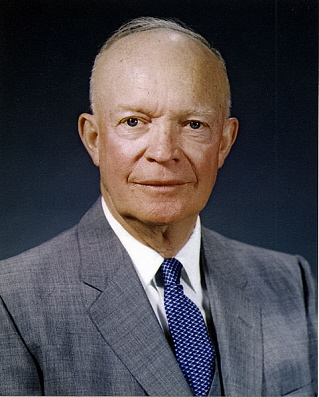
Audio mp3 of Address
Good evening, my fellow Americans.
First, I should like to express my gratitude to the radio and television networks for the opportunities they have given me over the years to bring reports and messages to our nation. My special thanks go to them for the opportunity of addressing you this evening.
Three days from now, after half century in the service of our country, I shall lay down the responsibilities of office as, in traditional and solemn ceremony, the authority of the Presidency is vested in my successor. This evening, I come to you with a message of leave-taking and farewell, and to share a few final thoughts with you, my countrymen.
Like every other -- Like every other citizen, I wish the new President, and all who will labor with him, Godspeed. I pray that the coming years will be blessed with peace and prosperity for all.
Our people expect their President and the Congress to find essential agreement on issues of great moment, the wise resolution of which will better shape the future of the nation. My own relations with the Congress, which began on a remote and tenuous basis when, long ago, a member of the Senate appointed me to West Point, have since ranged to the intimate during the war and immediate post-war period, and finally to the mutually interdependent during these past eight years. In this final relationship, the Congress and the Administration have, on most vital issues, cooperated well, to serve the nation good, rather than mere partisanship, and so have assured that the business of the nation should go forward. So, my official relationship with the Congress ends in a feeling -- on my part -- of gratitude that we have been able to do so much together.
We now stand ten years past the midpoint of a century that has witnessed four major wars among great nations. Three of these involved our own country. Despite these holocausts, America is today the strongest, the most influential, and most productive nation in the world. Understandably proud of this pre-eminence, we yet realize that America's leadership and prestige depend, not merely upon our unmatched material progress, riches, and military strength, but on how we use our power in the interests of world peace and human betterment.
Throughout America's adventure in free government, our basic purposes have been to keep the peace, to foster progress in human achievement, and to enhance liberty, dignity, and integrity among peoples and among nations. To strive for less would be unworthy of a free and religious people. Any failure traceable to arrogance, or our lack of comprehension, or readiness to sacrifice would inflict upon us grievous hurt, both at home and abroad.
Progress toward these noble goals is persistently threatened by the conflict now engulfing the world. It commands our whole attention, absorbs our very beings. We face a hostile ideology global in scope, atheistic in character, ruthless in purpose, and insiduous [insidious] in method. Unhappily, the danger it poses promises to be of indefinite duration. To meet it successfully, there is called for, not so much the emotional and transitory sacrifices of crisis, but rather those which enable us to carry forward steadily, surely, and without complaint the burdens of a prolonged and complex struggle with liberty the stake. Only thus shall we remain, despite every provocation, on our charted course toward permanent peace and human betterment.
Crises there will continue to be. In meeting them, whether foreign or domestic, great or small, there is a recurring temptation to feel that some spectacular and costly action could become the miraculous solution to all current difficulties. A huge increase in newer elements of our defenses; development of unrealistic programs to cure every ill in agriculture; a dramatic expansion in basic and applied research -- these and many other possibilities, each possibly promising in itself, may be suggested as the only way to the road we wish to travel.
But each proposal must be weighed in the light of a broader consideration: the need to maintain balance in and among national programs, balance between the private and the public economy, balance between the cost and hoped for advantages, balance between the clearly necessary and the comfortably desirable, balance between our essential requirements as a nation and the duties imposed by the nation upon the individual, balance between actions of the moment and the national welfare of the future. Good judgment seeks balance and progress. Lack of it eventually finds imbalance and frustration. The record of many decades stands as proof that our people and their Government have, in the main, understood these truths and have responded to them well, in the face of threat and stress.
But threats, new in kind or degree, constantly arise. Of these, I mention two only.
A vital element in keeping the peace is our military establishment. Our arms must be mighty, ready for instant action, so that no potential aggressor may be tempted to risk his own destruction. Our military organization today bears little relation to that known of any of my predecessors in peacetime, or, indeed, by the fighting men of World War II or Korea.
Until the latest of our world conflicts, the United States had no armaments industry. American makers of plowshares could, with time and as required, make swords as well. But we can no longer risk emergency improvisation of national defense. We have been compelled to create a permanent armaments industry of vast proportions. Added to this, three and a half million men and women are directly engaged in the defense establishment. We annually spend on military security alone more than the net income of all United States cooperations -- corporations.
Now this conjunction of an immense military establishment and a large arms industry is new in the American experience. The total influence -- economic, political, even spiritual -- is felt in every city, every Statehouse, every office of the Federal government. We recognize the imperative need for this development. Yet, we must not fail to comprehend its grave implications. Our toil, resources, and livelihood are all involved. So is the very structure of our society.
In the councils of government, we must guard against the acquisition of unwarranted influence, whether sought or unsought, by the military-industrial complex. The potential for the disastrous rise of misplaced power exists and will persist. We must never let the weight of this combination endanger our liberties or democratic processes. We should take nothing for granted. Only an alert and knowledgeable citizenry can compel the proper meshing of the huge industrial and military machinery of defense with our peaceful methods and goals, so that security and liberty may prosper together.
Akin to, and largely responsible for the sweeping changes in our industrial-military posture, has been the technological revolution during recent decades. In this revolution, research has become central; it also becomes more formalized, complex, and costly. A steadily increasing share is conducted for, by, or at the direction of, the Federal government.
Today, the solitary inventor, tinkering in his shop, has been overshadowed by task forces of scientists in laboratories and testing fields. In the same fashion, the free university, historically the fountainhead of free ideas and scientific discovery, has experienced a revolution in the conduct of research. Partly because of the huge costs involved, a government contract becomes virtually a substitute for intellectual curiosity. For every old blackboard there are now hundreds of new electronic computers. The prospect of domination of the nation's scholars by Federal employment, project allocations, and the power of money is ever present -- and is gravely to be regarded.
Yet, in holding scientific research and discovery in respect, as we should, we must also be alert to the equal and opposite danger that public policy could itself become the captive of a scientific-technological elite.
It is the task of statesmanship to mold, to balance, and to integrate these and other forces, new and old, within the principles of our democratic system -- ever aiming toward the supreme goals of our free society.
Another factor in maintaining balance involves the element of time. As we peer into society's future, we -- you and I, and our government -- must avoid the impulse to live only for today, plundering for our own ease and convenience the precious resources of tomorrow. We cannot mortgage the material assets of our grandchildren without risking the loss also of their political and spiritual heritage. We want democracy to survive for all generations to come, not to become the insolvent phantom of tomorrow.
During the long lane of the history yet to be written, America knows that this world of ours, ever growing smaller, must avoid becoming a community of dreadful fear and hate, and be, instead, a proud confederation of mutual trust and respect. Such a confederation must be one of equals. The weakest must come to the conference table with the same confidence as do we, protected as we are by our moral, economic, and military strength. That table, though scarred by many fast frustrations -- past frustrations, cannot be abandoned for the certain agony of disarmament -- of the battlefield.
Disarmament, with mutual honor and confidence, is a continuing imperative. Together we must learn how to compose differences, not with arms, but with intellect and decent purpose. Because this need is so sharp and apparent, I confess that I lay down my official responsibilities in this field with a definite sense of disappointment. As one who has witnessed the horror and the lingering sadness of war, as one who knows that another war could utterly destroy this civilization which has been so slowly and painfully built over thousands of years, I wish I could say tonight that a lasting peace is in sight.
Happily, I can say that war has been avoided. Steady progress toward our ultimate goal has been made. But so much remains to be done. As a private citizen, I shall never cease to do what little I can to help the world advance along that road.
So, in this, my last good night to you as your President, I thank you for the many opportunities you have given me for public service in war and in peace. I trust in that -- in that -- in that service you find some things worthy. As for the rest of it, I know you will find ways to improve performance in the future.
You and I, my fellow citizens, need to be strong in our faith that all nations, under God, will reach the goal of peace with justice. May we be ever unswerving in devotion to principle, confident but humble with power, diligent in pursuit of the Nations' great goals.
To all the peoples of the world, I once more give expression to America's prayerful and continuing aspiration: We pray that peoples of all faiths, all races, all nations, may have their great human needs satisfied; that those now denied opportunity shall come to enjoy it to the full; that all who yearn for freedom may experience its few spiritual blessings. Those who have freedom will understand, also, its heavy responsibility; that all who are insensitive to the needs of others will learn charity; and that the sources -- scourges of poverty, disease, and ignorance will be made [to] disappear from the earth; and that in the goodness of time, all peoples will come to live together in a peace guaranteed by the binding force of mutual respect and love.
Now, on Friday noon, I am to become a private citizen. I am proud to do so. I look forward to it.
Thank you, and good night.
THE LATEST FROM ARIZONA

* Police are on the lookout for a possible accomplice to the alleged shooter. Local TV stations posted a photo that appears to be from surveillance cameras, although it is not clear where the photo was taken. http://bit.ly/eAQhvM
* ABC's Jason Ryan reports that according to several federal law enforcement officials: Loughner's Glock 19- 9mm was legally purchased at the Sportsman's Warehouse in Tucson, Arizona on November 30.
* Authorities have not said what Loughner's motive could be, but have described the suspect as "mentally unstable." Loughner had tried to join the military, but was rejected. It is not clear why.
* As of 8am ET, a hospital spokesman tells ABC that Giffords remains in critical condition, sedated in the Intensive Care Unit. The hospital spokesperson said -- reports that she was awake and recognized her husband are not true.
How Did Giffords Survive? Dr. Richard Besser explains how living through a gunshot to the brain is possible. WATCH: http://abcn.ws/glhdz7
* The number of injured has been revised up to 20, six fatalities.
* All six victims have been identified. 9 Year-old Christina Taylor Greene was at the even with a neighbor. She was interested in politics and government and had come to meet her Congresswoman. Judge John Roll, 63, was a respected federal judge. Gabriel Zimmerman, 30, was a former social worker who was on Giffords' staff. Also killed were Dorthy Murray, 76, Dorwin Stoddard, 76, and Pyllis Scheck, 79.
* FBI Director Robert Mueller is on the ground to personally coordinate the investigation. He is expected to appear with local authorities at 1PM ET press conference at the Pima County, Arizona Sherriff's office.
WHO IS GABBY GIFFORDS? "Rep. Gabrielle Giffords rides motorcycles and married an astronaut at a wedding where everything had to be biodegradable. She is a Democrat who champions gun rights, lists fiscal discipline as one of her top issues and was re-elected in a conservative district when Republicans took control of the House," ABC's Z. Byron Wolf reports. "'The federal debt is the single biggest threat to our economy and national security today,' is emblazoned on her Congressional website. She wears the label centrist proudly. But she supported Nancy Pelosi and President Obama on their most important policy initiatives, like the health reform law and the climate change bill that passed the House of Representatives in 2009, but failed in the Senate. Her independent streak is more on display where immigration policy is concerned." http://abcn.ws/eWAucJ
Inside Giffords' Marriage to Astronaut Mark Kelly. The two wed one year after her election to Congress. WATCH: http://abcn.ws/eQ2Qfu
INTERN STAYS BY GIFFORDS' SIDE. In an exclusive interview with "This Week" anchor Christiane Amanpour, Daniel Hernandez, the intern described by some as the hero who assisted Congresswoman Giffords immediately after the shooting, provided a first-hand account of the tragic shooting in Tucson, Arizona. "When I heard gunshots, my first instinct was to head toward the congresswoman to make sure that she was okay," Hernandez told Amanpour. "Once I saw that she was down, and there were more than one victim, I went ahead and started doing the limited triage that I could with what I had." http://abcn.ws/fuU5Kj
More from the Arizona Republic: "Daniel Hernandez had been U.S. Rep. Gabrielle Giffords' intern for five days when she was shot Saturday outside Tucson," The Arizona Republic's Jaimee Rose and Mary Jo Pitzl report. "The junior at the University of Arizona was helping check people in at the "Congress on Your Corner" event when he heard gunfire. He was about 30 feet from the congresswoman. When the shots began, he ran toward them. 'I don't even know if the gunfire had stopped,' he said Saturday night as he kept a vigil at the University Medical Center cafeteria, gathered near a TV watching tributes and getting updates. Using his hand, Hernandez applied pressure to the entry wound on her forehead. He pulled her into his lap, holding her upright against him so she wouldn't choke on her own blood. Giffords was conscious, but quiet." http://bit.ly/dHnhHX
CONGRESSMAN UPS SECURITY. The staff of Democratic U.S. Rep. Andre Carson of Indianapolis increased security Saturday following the shooting of a colleague in Arizona," the AP reports. "'We have taken appropriate steps in light of the tragedy today in Arizona,' said Justin Ohlemiller, Carson's district director. "We've been in touch with Homeland Security and will continue to do so as the situation continues to evolve." Protesters last march shouted racists slurs at Carson and a second black congressman, Democrat John Lewis of Georgia, near the Capitol in Washington as Congress debated the health care overhaul. Carson has no immediate plans to change any public appearances, but Ohlemiller declined to say whether the congressman was in Indianapolis or Washington, D.C." http://bit.ly/eNTmnR
NOTED: ABC News Radio's Aaron Katersky interviewed Rep. Jackie Speier, D-Calif, who was shot five times in 1978, traveling as an aide to Rep. Leo Ryan, who was killed in the shooting outside Jonestown. She told ABC that she's adamant -- at least for her part -- that security for members of congress not be increased at home."I certainly don't want to have to be required to have a police presence," Speier said. "If that's the case, then it's time for me to no longer be a congress member."
HOUSE POSTPONES HEALTH CARE REPEAL. "House Majority Leader Eric Cantor, R-Va., announced that the House will delay its efforts to repeal the health care law next week as well as other legislative business "so that we can take whatever actions may be necessary in light of today's tragedy," ABC's John R. Parkinson reports. "Lawmakers voted last week to schedule debate and a vote on repealing health care reform on Wednesday. Repeal was expect to pass in the House, but chances were less likely in the Senate and the White House threatened to veto it. "All legislation currently scheduled to be considered by the House of Representatives next week is being postponed so that we can take whatever actions may be necessary in light of today's tragedy," Cantor said in a statement yesterday. http://abcn.ws/gIqocx
Giffords' Close Friend Speaks Out: Tilman Fertitta talks about Rep. Gabrielle Giffords' personal side. WATCH: http://abcn.ws/e1vyHb