
We’ve been batting down bogus claims about the Affordable Care Act for years, since 2009, when legislation was still in the debate stage. But they’ve been increasing in intensity in recent months as we approach Oct. 1, the date the insurance exchanges will be open for business for those buying their own insurance, mainly with the help of federal subsidies.
So, more than three years after our last health-care-whoppers piece (published just before the law was signed in 2010), we’re giving readers a rundown of the top claims.
Some have been around for years, and others are relatively new. Most touch on three topics: jobs, premium costs and medical care. For instance:
- Republicans have made the overblown claim that the law is a job-killer, but experts predict a small impact on mainly low-wage jobs. The Republican National Committee says 8.2 million part-timers can’t find full-time work “partly” due to the law. That’s the total number of part-time workers who want full-time jobs, and there’s no evidence from official jobs figures that the law has had an impact.
- Proponents say premiums will go down, while opponents say they’ll go up. In general, employer plans won’t be affected much, and a price change for individuals seeking their own insurance will vary from person to person. Obama claimed that all of the uninsured would see lower premiums than what they could get now (before accounting for federal subsidies), but that’s not the case.
- Critics continue to make scary claims about the government coming between you and your doctor, but the law doesn’t set up a government-run system. If anything, the law comes between you and your insurance company, forbidding them from capping your coverage or charging you more based on health status. Meanwhile, Obama can’t promise you can keep your plan. Employers are free to switch coverage, just as they were before.
And there’s more. Since 2010, we’ve been debunking the persistent claim that members of Congress are somehow exempt from the law. They’re not. The administration’s recent decision to give exchanges leeway in how they verify suspect applications for subsidies sparked the false claim that Americans can list what they’d like for their incomes and won’t face verification.
Beyond these more reasonable topics, we’ve seen our share of far-fetched viral messages about microchips being implanted in patients and forced home inspections by the government. Rest assured. Neither is true.
Analysis
The law is long, complicated and still being implemented. Many of the claims we’ve seen — and expect to see for some time to come — center on the impact on employers (or employees), premium rates and medical decisions.
Jobs
Claim: 8.2 million Americans can’t find full-time work partly due to Obamacare.
FactCheck.org says: False.
This assertion from the Republican National Committee echoes others conservative claims that the law is hindering part-timers from finding full-time jobs. But the RNC’s 8.2 million figure was the total number in June of part-time workers in the U.S. seeking full-time work — what the Bureau of Labor Statistics calls “part-time for economic reasons” — and there’s no evidence from BLS numbers that the law has had an impact on such workers. There were more in this “part-time for economic reasons” category in March 2010, when the Affordable Care Act was signed into law (9.1 million). The latest figure, from August, is 7.9 million.
 The law requires employers with 50 or more full-time employees to provide insurance or pay a fine. (This provision was delayed until 2015.) Full-time is defined as 30 hours per week. These details have fueled Republican claims that the law will cause — or is causing — employers to reduce their employees’ hours to get under the 30-hour/50-employee thresholds. It’s certainly possible that some employers will try to get by with fewer workers, or fewer worker-hours. And some among millions of part-timers seeking full-time work may have had their hours cut. But we can’t say how many that would be, and neither can the RNC.
To be sure, there have been plenty of news reports of employers, particularly those, like retail stores or restaurants, with low-wage employees, saying they’re concerned and uncertain about the impact of the law, and they might cut hours or workers on their payrolls. We can’t predict what companies might do once the employer requirements take effect.
While the BLS numbers don’t show an impact on part-time workers seeking full-time work, there is some anecdotal evidence of employers cutting the hours of part-time workers to get or keep them under a 30-hour-a-week limit. The Washington Post, for instance, wrote about the state of Virginia implementing such a cap on the hours of part-timers, like adjunct faculty at Northern Virginia Community College. And other colleges have instituted such limits, according to press reports. These employers have not indicated in the news reports whether they would be hiring additional workers, or increasing the hours of others, to fill in the gaps.
“ObamaCare by the Numbers,” Aug. 2
Claim: The law is a job-killer.
FactCheck.org says: Overblown.
It’s true nonpartisan economic analyses have estimated a “small” loss of mainly low-wage jobs because of the law. But as one expert told us, there hasn’t been much analysis of this impact of the law because, he believes, economists think the impact will be minimal. Still, Republicans have continued to push the idea that the law will have a significant effect on jobs.
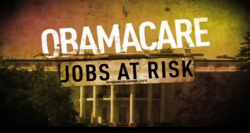
This claim made our “Whoppers of 2011” list, and it has continued to be pushed in various forms — with the latest being the claims about part-time work. Mainly, the “job-killer” claims severely distort a 2010 nonpartisan Congressional Budget Office report that said the law would have a “small” impact on jobs. And that’s mainly from workers choosing to work less. For instance, some might work fewer hours if they receive subsidies to help them buy insurance, or those close to retirement may retire early, with some reassurance that they can buy insurance on their own.
The CBO report said this decrease in the amount of labor in the economy would amount to one-half of 1 percent, which Republicans quickly translated into a loss of actual jobs. But, as we said, CBO clearly explained this would come about “primarily by reducing the amount of labor that workers choose to supply.”
CBO did say, however, that the employer requirements to provide insurance or pay a fine “will probably cause some employers to respond by hiring fewer low-wage workers.” But they may hire more part-time or seasonal workers instead. CBO hasn’t put a number on these jobs.
Other experts we’ve consulted have predicted a minimal impact. The Lewin Group, a subsidiary of UnitedHealth Group that operates independently of the company, estimated a 150,000 to 300,000 job loss of minimum wage or near minimum wage positions. Not included is an unknown increase in jobs in health care and insurance. Altogether, Lewin’s then-senior vice president told us there would be a “small net job loss.”
In July, claims about the law killing jobs took the form of a “mis-tweet” from several congressional Republicans, who wrongly tweeted “74% of small businesses will fire workers, cut hours under #Obamacare.” But the online, opt-in survey from the U.S. Chamber of Commerce, which opposes the law, found no more than 13 percent of the small businesses that responded said that. During the presidential campaign, Republican nominee Mitt Romney cited an earlier survey from the group to bolster his claims.
“GOP Mistweets #Obamacare Survey Results,” July 25
“Romney, Obama Uphold Health Care Falsehoods,” June 28, 2012
“GOP’s ‘Job-Killing’ Whopper, Again,” Feb. 21, 2012
“The Whoppers of 2011,” Dec. 20, 2011
Premiums
Claim: Premiums are going up because of the law. Premiums are going down because of the law.
FactCheck.org says: It depends.
Politicians have been making these claims since before the law was passed — it was the first item on our list of whoppers back in 2010. Both sides have a penchant for misrepresenting studies on the matter to support their point. Our short answer — “it depends” — may be unsatisfactory to readers, but whether you’ll pay more or less than you would have without the law depends on your circumstances.
Are you uninsured and have a preexisting condition? You’ll likely pay less than you would have otherwise. Are you uninsured but young and healthy? You’ll likely pay more (without accounting for any subsidies you may receive). Are you insured through your employer? You likely won’t see much change either way.

Let’s start with employer-sponsored insurance. Employer-sponsored premiums did go up slightly due to the law from 2010 to 2011 (a 1 percent to 3 percent increase, according to experts), because of added benefits, such as coverage for dependents up to age 26, free preventive care and an increase in caps on coverage. Overall, premiums for family plans jumped 9 percent that year, with the bulk of that due to higher medical costs, not, as critics claimed, the health care law. Since then, premium growth has been 4 percent on average for 2012 and 2013, modest growth rates historically.
Note that premiums have been going up for years and will continue to do so — with or without the health care law. When Democrats make claims about premiums going down, they’re talking about premiums growing at a lower rate than they would have otherwise.
The growth in national health spending (that’s spending from the government, businesses and individuals) from 2009 to 2011 also has been at around 4 percent, the lowest level since such spending was first measured in 1960. President Obama has boasted that the ACA has helped make this happen. It could be playing some role, with an emphasis on new payment models, but experts say the cause is mainly the down economy. A Kaiser Family Foundation studysaid the economy was responsible for 77 percent of the slow growth rate, and that rate is expected to pick up as the economy recovers.
Now, the big question mark is for those who buy their own insurance. We’ll know more in October, when the state and federal exchanges have published rates and are accepting applications. But even then, it will be difficult, if not impossible, to make generalizations. Some folks will pay more, some will pay less, than what they would have otherwise. Many who had purchased on the individual market in the past will get more generous benefits — which will be good news for some and irrelevant to others. And the vast majority buying their own exchange plans — 80 percent, according to the CBO — will receive subsidies that bring their total out-of-pocket costs down.
These plans sold to individuals can no longer charge more based on health status or gender, but they can vary premiums based on geography, age and tobacco use. Republicans have warned of a “rate shock” in this market, with the young and healthy being subject to higher premiums if the market is flooded with older and less healthy policyholders. A RAND study, published in August and sponsored by the Department of Health and Human Services and the Centers for Medicare and Medicaid Services, estimated there would be “no widespread trend toward sharply higher prices in the individual market,” in the words of the lead author. But rates would likely vary from state to state.
The research group looked at 10 states and the U.S. overall, estimating no premium change for the U.S. at large and five states, a decline in two states, and an increase up to 43 percent in three states, not accounting for tax credits. The study, which held age, tobacco use and actuarial value (level of coverage) constant in comparisons, said average out-of-pocket costs would be unchanged or decline for all states once tax credits are factored in.
But that’s one estimate from an economic model, with noted “limitations.” Says the RAND study: “Current data on nongroup premiums are limited, and there are many uncertainties about how individuals and insurers will respond to the complex policy changes introduced by the Affordable Care Act.” It cautions against “sweeping statements” about the impact on premiums, since rates will differ based on individual circumstances.
That brings us back to our short answer: It depends.
“False Assumptions on the Health Care Law,” July 11
“Obama Overhypes Health Savings,” July 19
“Health Insurance Premium Spin,” April 5
Claim: All of the uninsured will pay less on the exchanges than they could now on the individual market, even without federal subsidies.
FactCheck.org says: False.
President Obama made this claim at an Aug. 9 press conference, saying that beginning Oct. 1, the 15 percent of the population that’s uninsured would be able to “sign up for affordable quality health insurance at a significantly cheaper rate than what they can get right now on the individual market.” Obama went on to emphasize that that was before including federal subsidies. “And if even with lower premiums they still can’t afford it, we’re going to be able to provide them with a tax credit to help them buy it,” he added.
But even Obama’s secretary of health and human services, Kathleen Sebelius, has acknowledged that young persons would likely pay more and older Americans would likely pay less on the insurance exchanges. As we explained, the reason is that the ACA changes how insurance companies can price these policies on the individual market — it forbids insurance companies from charging more for persons with preexisting conditions or based on gender, and limits them to charging older policyholders no more than three times what they charge to younger policyholders. Premiums can also vary based on geography and smoking — but smokers can only be charged 1.5 times the rate for nonsmokers.
There won’t be any super-cheap plans for the young and healthy, nor sky-high premiums for older folks or those with health conditions. (High-deductible catastrophic plans, however, will be available to those under 30, or older Americans with hardship exemptions. They can be purchased only without federal subsidies.) Some on the exchanges will pay less; some will pay more than what they could get now. Economist Jonathan Gruber of the Massachusetts Institute of Technology was a paid adviser to both the Obama administration and then-Gov. Mitt Romney’s administration on health care plans. Gruber told us a “small share” of the uninsured would pay higher premiums on the exchanges. “The president is right for the average uninsured person, but not for all uninsured people,” he said.
That’s before subsidies, of course. Only 10 percent of the uninsured earn too much to qualify for federal subsidies on the exchanges, according to a Kaiser Family Foundation report. But Obama claimed they’d pay less even without the federal help.
“Obama Overpromises on Premiums,” Aug. 13
Claim: 8.5 million Americans will receive rebates this year averaging about $100 each because of the health care law.
FactCheck.org says: Misleading.
President Obama has stretched the facts in making this boast about the law’s impact. The rebates are real, but most of them will go to companies offering insurance to their workers. Only those who buy their own insurance will get a rebate check directly. And the $100 is an average per family, not per person.
 The law requires insurance companies to spend at least 80 percent of premiums on health costs — as opposed to spending on administration and marketing, and, of course, profit. If companies don’t meet the 80/20 ratio, they have to issue a rebate to consumers. Large group plans have to meet an 85/15 ratio. In 2012 and again in 2013 rebates were sent out, but Obama has pitched this as Americans receiving checks in the mail. This year, in a July 18 speech, he talked about “millions of Americans” opening letters from their insurers and being “pleasantly surprised with a check. In 2012, 13 million rebates went out, in all 50 states. Another 8.5 [million] rebates are being sent out this summer, averaging around 100 bucks each.”
But most of the money went directly to employers who provided the policies to their workers. Of the 8.5 million benefiting from this provision in 2013, 2.7 million are on the individual market, according to the Centers for Medicare and Medicaid Services, meaning the rebate would go directly to them. In 2012, 4 million of the 13 million benefiting were on the individual market. Those with employer plans could still see a benefit, as savings are passed along in some way to them. But, as the Department of Labor, which spells out in its guidanceon the matter, says, employers who pay part of the premium are entitled to part of the rebate.
“Obama Overhypes Health Savings,” July 19
“Romney, Obama Uphold Health Care Falsehoods,” June 28, 2012
Medical Care
Claim: You won’t be able to choose your own doctor.
Claim: The government will be between you and your doctor.
Claim: The government will be between you and your doctor.
FactCheck.org says: False.
These claims are variations on the fear that the government will be taking over health care — choosing your doctor, telling him or her what treatment to administer, etc. But the law doesn’t create a government-run system, as we’ve said many times. It actually greatly expands business for private insurance, by about 12 million new customers, according toCongressional Budget Office estimates. And individuals will choose their own doctors, just as they do now.
These type of fear-mongering claims appear to have quieted a bit in 2013 — along with the more extreme death-panel-type hysteria — but they’re still percolating. A TV ad this summer from the conservative Americans for Prosperity featured a mom named Julie, gently asking, “If we can’t pick our own doctor, how do I know my family’s going to get the care they need?” And: “Can I really trust the folks in Washington with my family’s health care?”
 It turns out, Julie doesn’t really mean that she might not be able to select her doctor herself. Part of the group’s support for the claim is the small net decline, as estimated by the CBO, in those who get insurance through their employer, a drop of 7 million people by 2018. (A total of 158 million are expected to have employer-sponsored coverage that year.) The CBO has said that those losing coverage would mainly be low-wage workers who could get subsidies to buy insurance on the exchanges. And, certainly, there’s a chance the doctor a worker had been seeing won’t be in the network of providers on a new plan. Some exchange policies could keep prices low by limiting those networks. But no one will choose policyholders’ doctors for them. They simply won’t be guaranteed that a new plan would have the same network of doctors, just as there’s no guarantee of that now (more on this in a minute).
As for the government-coming-between-you-and-your-doctor claim, the law’s regulatory provisions are more like putting the government between you and your insurance company — and in a way that brings added benefits to consumers. The law says insurers can’t have caps on coverage, turn down customers based on preexisting conditions (or charge them more), and can’t spend more than 15 percent or 20 percent on non-medical-related costs (see Obama’s rebate claim above).
Republicans also have attacked the Independent Payment Advisory Board as some kind of rationing board. But the IPAB — which is made up of medical professionals, health care experts, economists and consumer representatives — is charged with slowing the rate of growth of Medicare spending, and limited in how it can go about doing that. The law says the board’s proposals “shall not include any recommendation to ration health care, raise revenues or Medicare beneficiary premiums … increase Medicare beneficiary cost sharing (including deductibles, coinsurance, and co-payments), or otherwise restrict benefits or modify eligibility criteria.”
“False Assumptions on the Health Care Law,” July 11
“Romney, Obama Uphold Health Care Falsehoods,” June 28, 2012
“Romney’s ‘Gross’ Exaggeration on ‘Obamacare,’ “May 10, 2012
Claim: If you like your plan, you can keep your plan. If you like your doctor, you can keep your doctor.
FactCheck.org: Misleading.
Obama has repeatedly made this claim, and the White House continues to use the line on its website. The law doesn’t force Americans to pick new plans or new doctors, but the president simply can’t make this promise to everyone. There’s no guarantee that your employer won’t switch plans, just as companies could have done before the law. And if you switch jobs, your new work-based coverage might not have your doctor as an in-network provider, either.
As we mentioned above, some employees won’t have an offer of insurance and will look for a new plan on the exchanges. Some small businesses could drop their current plans and join the exchanges, too. Grocery store chain Trader Joe’s, for instance, announced that it will direct its part-time workers (less than 30 hours per week) to the exchanges for health coverage and provide them with $500 to help purchase it, as of Jan. 1, 2014. The company, which has provided coverage to such workers, said “many crew members should be able to obtain health care coverage at very little, if any, net cost.”
“Romney, Obama Uphold Health Care Falsehoods,” June 28, 2012
And There’s More …
Claim: Those applying for federal subsidies can lie about their income without facing verification.
FactCheck.org says: False.
The Obama administration gave the insurance exchanges some leeway in how they verify income eligibility for federal subsidies in the first year. That prompted Missouri Republican Sen. Roy Blunt to claim that the administration had “waived the income verification requirement” and that applicants can “say what you think your income’s going to be with no way to verify that.” Not true. The exchanges will compare applications with federal information — such as previous tax returns — and ask for additional information if the person has no previous tax filings.
Here’s where the administration’s new rule comes in: For applications in which stated income is more than 10 percent below what’s listed in government data, current income information isn’t available, and the additional information from the applicants is insufficient, a sample of those applications will face further requirements in 2014. Initially, all of these suspect applications were to face more scrutiny, but the exchanges will only have to verify a sample for the first year of operation.
So, if you’re the gambling type, you do have better odds of lying about your income and still getting a subsidy. At least for a while. But all income claims will be checked against 2014 tax filings, and the IRS can recoup at least some of the money. There are also IRS perjury penalties, and civil monetary penalties spelled out in the Affordable Care Act for providing fraudulent information.
“Blunt Wrong on Income Verification,” July 15
Claim: Congress is exempt from the law.
FactCheck.org says: False.
Several versions of this claim have been circulating since before the Affordable Care Act was passed. But no matter how many different ways the critics spin it, Congress isn’t exempt from the law. In fact, members and their staffs face additional requirements that other Americans don’t. Beginning in 2014, they can no longer get insurance through the Federal Employees Health Benefits Program, as they and other federal employees have done. Instead, they are required to get insurance through the insurance exchanges.
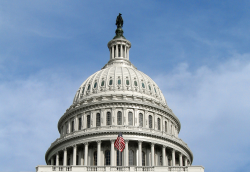
This “exempt” nonsense first percolated before that provision was added to the law through a Republican amendment. Before the amendment, the legislation said that Congress — as well as federal employees, employees of large companies, and those who get insurance through Medicare or Medicaid — wouldn’t be eligible for the exchanges, which were created by the law for those buying their own insurance and small businesses. But that certainly didn’t make Congress “exempt” — lawmakers were treated like any other worker with employer-provided health insurance. They were required to have coverage or face a penalty.
The claim has persisted even after the provision requiring Congress to get insurance from the exchanges became part of the final law. Fast forward to spring 2013, and the assertionsurfaced again when there was concern among lawmakers that the transition to exchange plans — particularly the transfer of the federal contribution toward premiums — wouldn’t go very smoothly. Politico published a piece on April 24 on lawmakers talking about changing the exchange requirement because of this. The headline on the story: “Lawmakers, aides may get Obamacare exemption.”
On Aug. 7, the Office of Personnel Management, which administers the FEHB Program,issued a proposed rule saying that the federal government could continue to make contributions toward the premiums of lawmakers and their staffs on the exchanges. The federal government has long made such premium contributions, as other employers do for their employees. OPM said the contribution couldn’t be more than what it is under the FEHB Program. That ruling, perhaps predictably, sparked new — and still bogus — claims from Republicans of Congress being “exempt” from the law.
“Congress Exempt from Health Bill?” Jan. 20, 2010
“Congress and an Exemption from ‘Obamacare’?” May 3, 2013
“No ‘Special Subsidy’ for Congress,” Aug. 30, 2013


